
Where Do Old Sneakers Go? The Real Cost of Shoe Waste
About 300 million pairs of shoes end up in U.S. landfills every year, and most of them still have plenty of life left in them.
That number surprises people, because shoes don’t feel like a big source of waste. You buy a few pairs a year, you wear them out, and they disappear into the trash or a bin somewhere. Multiply that across every closet in the country, though, and it turns into one of the most overlooked waste problems we have.
This post covers where old sneakers actually go, what a new pair costs the environment, and how much changes when a pair stays in use. If you’re a business or organization already collecting with GotSneakers, it’s also a good one to share with your team, and you can start a collection here.


Where old sneakers usually end up
When someone is done with a pair of sneakers, it typically goes one of four places.
The trash. This is where most pairs go, and once a shoe hits the landfill, it’s gone for good, along with every bit of material and energy that went into making it.
The back of the closet. Plenty of shoes don’t get thrown out right away. They sit for years until someone moves or cleans out, and then they go in the trash anyway.
A recycling program. Recycling keeps shoes out of landfills, which matters. A recycled shoe gets broken down into raw material, and that takes energy too.
Back into use. The best outcome for a wearable pair is that someone else wears it. It keeps a good pair, and everything that went into making it, in use.
Why shoes are a hard waste problem
A sneaker is built from a lot of different materials bonded together, including rubber soles, foam midsoles, fabric or leather uppers, and adhesives. That’s part of what makes them comfortable and durable, and it’s also what makes them hard to take apart once they’re done.
That’s why the order of options matters, with keeping a shoe in use first, recycling it second, and the landfill as the last resort.
What a new pair of sneakers costs the planet
Every new pair of shoes takes raw materials, factory energy, and shipping before it ever reaches a store shelf. GotSneakers estimates that each pair kept in circulation averts about 30 pounds of CO2e, roughly what it takes to make a new pair.
Thirty pounds sounds small for one pair, so here’s what it looks like at scale:
| Pairs kept in use | CO2e averted |
|---|---|
| 1 pair | 30 lbs |
| A bag of about 11 pairs | about 330 lbs |
| 1,000 pairs | 30,000 lbs |
| 5,350,000 pairs (GotSneakers to date) | 192,600,000 lbs |
What happens to sneakers sent to GotSneakers
Every pair that comes in gets hand-sorted and graded by brand, condition, and style, and goes through a multipoint inspection of the upper, interior, midsole, toe, and bottom. That inspection decides where the pair goes next.
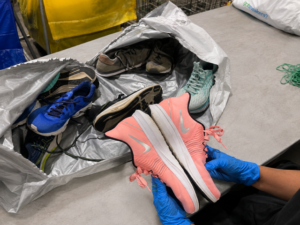
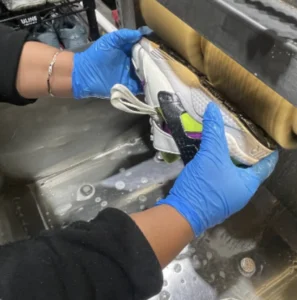
Reuse. Pairs that can be worn again are cleaned and sent into secondhand markets at home and abroad, where they’re worn for years more.
Recycle. Pairs that can’t be worn again are ground, separated, and remade into things like countertops, shelves, insoles, laces, and even new footwear.
No pair goes to a landfill.
What one month of collecting adds up to
GotSneakers partners send in shoes year-round, and every month the totals get counted and verified. Here’s what partners accomplished together in August 2026:
| August 2026 | Total |
|---|---|
| Pairs diverted from landfills | 73,945 |
| CO2e emissions averted | 2,218,350 lbs |
| Water saved | 166,893,865 gallons |
| Paid to partners | $62,129 |
Since the program started, partners have diverted 5,350,000 pairs from landfills, averted 192,600,000 pounds of CO2e, and raised $3,760,000 for individuals, businesses, and nonprofits.
What this means for your business
If your company runs a collection with GotSneakers, every partner gets its own Environmental Impact and Earnings Report each month. It shows how many pairs your team sent in and the environmental impact of those pairs.
Those numbers are useful well beyond the payout. You can share them with employees, include them in your sustainability reporting, or post them for customers. For ideas on keeping employees involved after launch, read how to keep employees engaged in your sustainability program all year.
FAQs about shoe waste
How many shoes end up in landfills each year?
About 300 million pairs of shoes end up in U.S. landfills every year, and most of them still have life left.
Can old sneakers be recycled?
Yes, sneakers that can’t be worn again can be ground down and separated into materials for products like countertops, shelves, insoles, and new footwear.
Is reusing shoes better than recycling them?
Yes, a reused pair keeps the materials and energy that went into making it doing their job. Recycling still takes energy to break a shoe down and remake it.
How much CO2e does reusing a pair of shoes save? GotSneakers estimates about 30 pounds of CO2e per pair kept in circulation, roughly what it takes to manufacture a new pair.
What kinds of shoes can be reused?
Athletic footwear and casual sneakers, in pairs, from dozens of brands. Boots, heels, wedges, dress shoes, water shoes, and single shoes don’t qualify. See the earnings guidelines for details.
Does my company get impact numbers for our collection?
Yes, every partner gets a monthly Environmental Impact and Earnings Report with its own totals.
Keep shoes in use
If your team is ready to start collecting, the starter kit and shipping are free, and your first impact report arrives on the 1st of the second month after we receive your bags.