
What to Do With Old Running Shoes (Reuse Beats Recycling)
Every runner has a pile of old shoes, from the pairs you retired at 400 miles to the ones that gave you a blister on your first long run and the impulse buy that never fit right. They sit by the door or in the back of the closet because throwing them in the trash feels wrong, and you aren’t sure what else to do with them.
You’re right that the trash is the wrong answer. About 300 million pairs of shoes end up in U.S. landfills every year, and most of them still have life left. A running shoe that’s done for your training plan can still carry someone else through years of walking, commuting, and errands.
This guide covers your options for old running shoes, why reuse does more good than recycling, and how to get paid for the pairs you send in. If you already know you want to clear out the pile, you can get your free starter kit here.

Why your old running shoes aren’t trash
Runners retire shoes for a reason that has nothing to do with whether the shoe is worn out. Once the midsole cushioning starts to break down, a shoe stops protecting you on a 10-mile run. That same shoe is still perfectly good for someone who walks to work, stands on their feet all day, or just needs a pair that fits.
That’s the gap reuse fills, because your training shoe becomes someone else’s everyday shoe and a good pair stays in use instead of sitting in a closet or a landfill.
Making a new pair of shoes takes materials, energy, and shipping. GotSneakers estimates that every pair kept in circulation averts about 30 pounds of CO2e, roughly what it takes to make a new pair. Multiply that across a run club’s worth of closets and the numbers get big fast.
Your options for old running shoes
There are four realistic things you can do with a pair you’ve retired.
1. Keep them for yard work or rainy days. That’s fine for one pair, but it won’t help with the six pairs in your closet.
2. Give them to a friend or a local shelter. It’s a good option when you know someone who wears your size and wants them. Most people don’t have a ready taker for every pair.
3. Drop them in a recycling bin. Some stores and municipal programs collect shoes for recycling. Recycling keeps shoes out of landfills, though it also grinds up a shoe that someone could have worn.
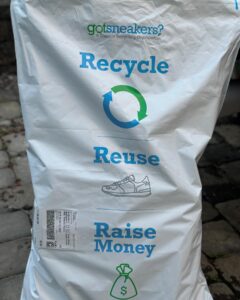
4. Send them to a reuse and recycling program that pays you. This is what GotSneakers does, and pairs that can be worn again get cleaned and sent back into the secondhand market while pairs that can’t be worn get recycled. Either way, nothing goes to a landfill, and you get paid for the pairs that qualify.
Why reuse beats recycling
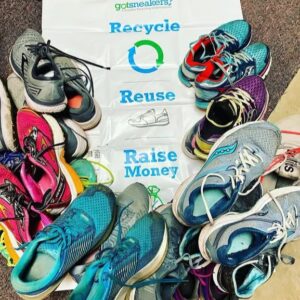
Recycling a shoe is better than burying it, and reuse is better still, because a reused shoe keeps doing the job it was made for.
When a pair gets cleaned up and worn again, the energy and materials that went into making it keep doing their job. When a pair gets recycled, it has to be ground down and separated, and the material gets remade into something new. That process takes energy of its own, and the shoe’s original purpose is gone.
That’s why GotSneakers inspects every pair first, putting each shoe through a multipoint check of the upper, interior, midsole, toe, and bottom to decide whether it can be worn again. Pairs that pass get cleaned and recirculated, and pairs that don’t are recycled into materials for countertops, shelves, insoles, laces, and even new footwear.
How to send in your old running shoes with GotSneakers
The whole process is free, and you never have to hand over a credit card or bank account.
- Get started. Fill out the form to create a free account. You’ll get a starter kit with collection bags and prepaid shipping labels.
- Fill your bags. Each bag holds about 10 to 12 pairs of qualifying footwear.
- Ship for free. Drop your bag off using the prepaid label. Shipping costs you nothing.
- Sorting and grading. Our team hand-sorts and grades every pair by brand, condition, and style.
- Get paid. You’ll receive an Environmental Impact and Earnings Report along with an eCheck for eligible footwear on the 1st of the second month after we receive your bag.
Which running shoes qualify
GotSneakers accepts athletic footwear from dozens of brands, including Nike, Adidas, Asics, Brooks, Hoka, New Balance, Saucony, Mizuno, Salomon, and Under Armour. A few rules keep things simple:
- Shoes must come in pairs. Single shoes can’t be accepted.
- Athletic and casual sneakers qualify. Boots, heels, wedges, dress shoes, and water shoes don’t.
- Gently worn pairs earn the most, because they’re the ones that get worn again.
For the full list, check the earnings guidelines.
Mistakes to avoid when clearing out old running shoes
Tossing them because they look rough. A muddy trail shoe can still clean up well, so let the inspection decide. Even pairs that can’t be worn again get recycled instead of landfilled.
Sending in singles. If one shoe from a pair went missing, keep looking before you send the other, because singles can’t be reused.
Waiting until the pile is huge. Shoes keep the most value when they’re sent in sooner. A pair that sits in a damp garage for three years is less likely to make it back into someone’s rotation.
Clearing out alone. If you run with a club or train at a gym, everyone there has the same pile. One collection bag at the club’s meetup spot fills up much faster than your closet does.
Turn it into a run club or gym collection
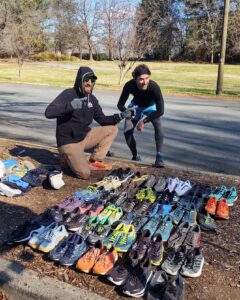
Run clubs and gyms are some of the easiest places to collect shoes, because the members go through more pairs than almost anyone. Put a bag by the front desk or bring one to your weekly group run, and the shoes show up on their own. The club gets paid for every eligible pair, which can cover race entries, gear, or post-run coffee.
If your shoes carry more memories than miles, read what to do with the race-day pair you can’t throw away. For the bigger picture on footwear waste, see where old sneakers actually go.
FAQs about old running shoes
How do I know when to retire my running shoes?
Most runners go by mileage and feel. When the cushioning goes flat or new aches show up, it’s time for a new pair. The old pair can still be worn for walking and everyday use.
Can I recycle running shoes?
Yes, some stores and city programs collect shoes for recycling. GotSneakers reuses pairs that can be worn again and recycles the rest, so nothing goes to a landfill.
Can I get money for old running shoes?
Yes, GotSneakers pays for eligible footwear by eCheck. The amount depends on the brand, condition, and style of each pair.
Does it cost anything to send in shoes?
No, the starter kit, the collection bags, and shipping are all free.
Do my shoes need to be clean?
They don’t need to be spotless, but knock off loose dirt and make sure the pairs are dry before they go in the bag.
What happens to shoes that can’t be worn again?
They get recycled into materials used for countertops, shelves, insoles, laces, and new footwear.
Get your starter kit
Request a free starter kit, and your collection bags and prepaid shipping labels will be on their way within a few business days.